
- About JUNR
- Products
- Refurbishment
- Service
- News
- Contact
 EN
EN


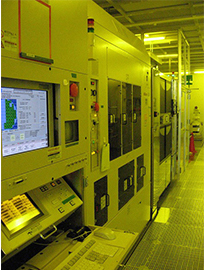
Nikon Stepper i7-i14 Sales / Maintenance / lnstallation
Junr Technologe is a professional Nikon lithographic machine service provider. We provide cus-tomers with Nikon stepper i7-i14 maintenance, modification and installation and commissioning services. We also provide customers with various i7-i14 accessories and consumables, litho-graphic machine maintenance tools and supplies. Welcome your consultation and purchase.
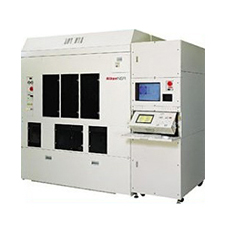
- ● Installation And Commissioning
- ● Maintenance And Moving Service
- ● Full Range Of Accessories
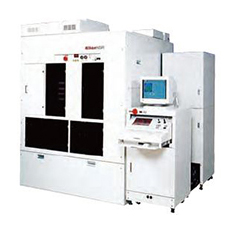
- ● Nikon 2205i11C
- Resolution: 450 nm
- NA: 0.63
- Light Source: i-line
- Reduction Ratio:1:5
- Field:22 mm
- Wafer Size:150mm/200mm reconfigurable to multiple sizes
- Wafer Loader Type 2
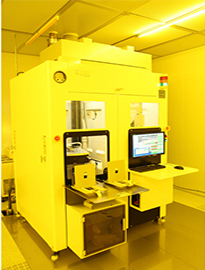
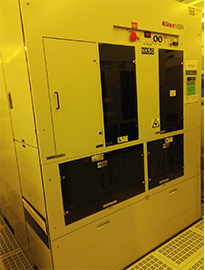
FAQ – Nikon Stepper i7-i14 Lithography Systems
What is the Nikon Stepper i7-i14 series?
The Nikon i7-i14 series is a group of i-line stepper lithography systems designed for mature semiconductor manufacturing processes. These systems use a 365 nm i-line light source and projection optics to transfer circuit patterns from photomasks onto silicon wafers with high precision. Nikon i-line steppers are widely used in MEMS fabrication, power semiconductor production, analog IC manufacturing, and research laboratories.
What wafer sizes can the Nikon i7-i14 stepper support?
Most Nikon i7-i14 lithography systems support both 150 mm (6-inch) and 200 mm (8-inch) wafers. Some configurations allow reconfiguration between different wafer sizes depending on the wafer handling system and loader configuration. This flexibility makes the platform suitable for fabs that process multiple wafer formats.
What resolution can Nikon i-line steppers achieve?
Typical Nikon i-line steppers such as the 2205i11C can achieve a resolution around 450 nm, depending on process conditions, photoresist performance, and illumination settings. These systems are commonly used for manufacturing nodes in the 0.5 µm to 1 µm range, which are still widely used in power devices, MEMS, and specialty semiconductor production.
What industries typically use Nikon i-line steppers?
Nikon i-line stepper systems are widely used in several industries, including:
• MEMS manufacturing
• Power semiconductor devices (IGBT, MOSFET)
• Analog and mixed-signal IC production
• Sensor fabrication
• University and research institute cleanrooms
Because these processes do not require extremely small nodes, i-line steppers remain a cost-effective solution.
Are Nikon i7-i14 steppers still used in semiconductor fabs today?
Yes. Although advanced logic manufacturing has moved to deep-UV and EUV lithography, i-line stepper systems remain widely used in mature node manufacturing and specialty semiconductor applications. Many fabs continue to operate these machines due to their reliability, lower operating cost, and suitability for larger feature sizes.
What services are typically required when installing a used Nikon stepper?
Installing a used lithography system usually requires several engineering steps, including:
• Equipment dismantling and packing
• Transportation and relocation
• Cleanroom installation
• Optical and mechanical alignment
• System calibration and testing
• Process qualification
Professional installation and commissioning are essential to ensure stable lithography performance.
What spare parts are commonly required for Nikon i-line steppers?
Common spare parts and consumables for Nikon steppers include:
• Exposure lamps and optical components
• Stage and motion control parts
• Alignment sensors
• Wafer handling components
• Electronic control boards
• Vacuum and pneumatic system parts
Having reliable access to spare parts is important for maintaining long-term equipment operation.
How important is maintenance for Nikon stepper systems?
Regular maintenance is essential to maintain lithography accuracy and equipment uptime. Key maintenance areas include:
• optical system cleaning and inspection
• stage calibration and motion verification
• illumination system adjustment
• environmental control verification
• periodic system diagnostics
With proper maintenance, Nikon stepper systems can remain operational for many years.
Where can companies obtain professional support for Nikon stepper systems?
Professional support services typically include equipment supply, installation, maintenance, relocation, and spare parts support. Working with experienced service providers ensures that the system is properly installed, calibrated, and maintained for stable production performance.
Companies with technical experience in Nikon lithography equipment can provide engineering services tailored to semiconductor manufacturing facilities.


